

Scroll Down
Scroll Down
Scroll Down
Lighting design: Marco Miglioli (Marco Miglioli ArchiLight Studio) with Sapiens Design Studio.
Client: International Rescue Committee. Coordination: Wazoku.
NEW YORK I NEW YORK | USA

BUILD Architecture Awards 2026
Winner
It requires no electricity to illuminate a small space, emits light for 12 hours, has a lifespan of over 25 years, and costs just 5 euros
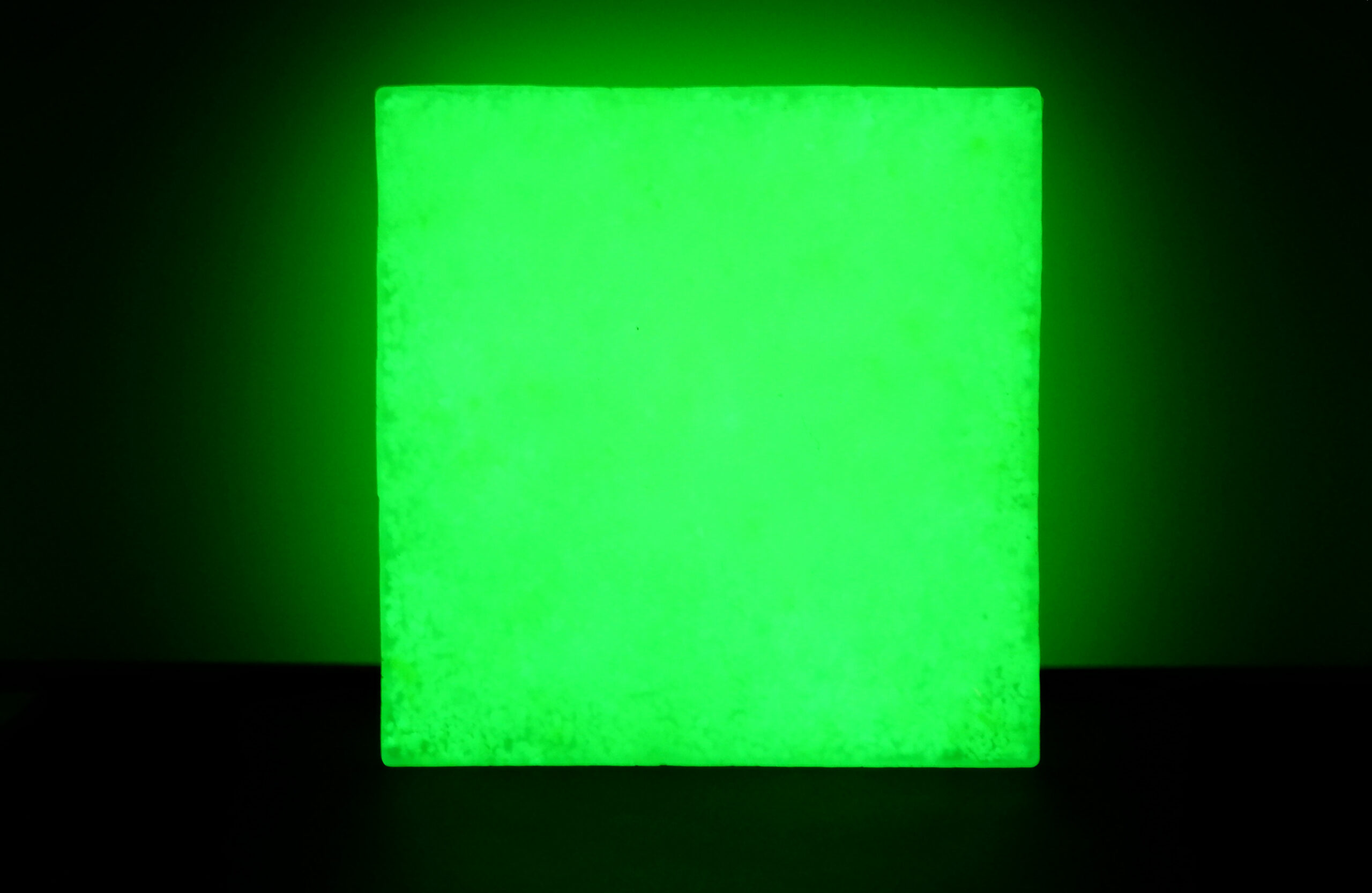
First prototype of the “Phluò” lamp used for lighting sanitary facilities in refugee camps
“Phluò” is the name we gave to the prototype of a modular phosphorescent lamp with which we won the international competition “Application of Phosphorescence Technology for Toilet Lighting in Refugee Camps”, promoted by the IRC (International Rescue Committee).
The aim of the competition was “identify innovative and sustainable ways to make toilets for women and girls in refugee camps or settlements for internally displaced people safer and more comfortable”, free from direct sources of electrical energy (such as solar panels or batteries).
What motivated us to take part was not only the technical challenge posed by the project, but also its ethical and social dimension: the opportunity to work on a new form of sustainable and low-cost lighting in a context where the absence of light makes survival and coexistence even more precarious. Providing this fundamental resource is part of a broader commitment to ensuring a basic level of safety and the protection of human dignity for people living in desperate conditions.
“the innovative, low-cost phosphorescent lighting solutions thet emerge from this challenge,” says Bansaga Saga, IRC Technical Advisor for West Africa, “not only illuminate latrines, but also highlight the potential that groundbreaking innovations can have in addressing the urgent protection needs of women and girls in crisis situations.” This underlines the need to safeguard the most vulnerable people in moments of greatest fragility. In particular, considering that in refugee camps night-time lighting is often absent, walking to latrines in the dark exposes people, especially women and children, to serious risks: ranging from assaults by other refugees to attacks by wild animals.

Aerial view of a refugee camp.
The image is intentionally artificially generated so that it can represent a generic refugee camp reflecting the characteristics for which “Phluò” was created

Latrines in a refugee camp.
Image taken from the IRC competition website
The conditions set by IRC for the lamp design were: reduced low cost (5 US dollars per lamp), given its large-scale deployment; a light duration of 12 hours after a maximum charging time of 8 hours; ease of construction and installation using only basic tools (hammer, nails, hacksaw, container); resistance to weather, vandalism and theft; a lifespan exceeding 25 years; and sufficient light to read a sheet of text.
The lamp’s simple, geometric form and its chemical composition were conceived with the management of refugee camps and their conditions in mind: limited financial resources and the use of easily available materials (online or locally sourced, non-toxic and partially recyclable at end of life). As the construction process can be carried out by non-specialised people with limited access to technology, manufacturing the lamp can also offer opportunities for social inclusion and empowerment within displaced communities.

Initial tests with the first prototype
The “Phluò” lamp has a monolithic, waterproof surface that prevents the accumulation of dirt and dust and is easy to clean (with a cloth or water jets). In addition its surface does not allow the proliferation of fungi or bacteria, making it particularly suitable for hygienic and sanitary facilities. Another key feature is its permeability to UV rays which, while being one of the main energy sources for recharging the lamp, do not damage its structure over time, thus preserving its luminous performance. “Phluò” has been designed to withstand not only atmospheric agents (rain, temperature fluctuations), but also impacts and acts of vandalism.
Furthermore, Its construction requires just one day and, thanks to the possibility of serial production, allows lamps to be installed in new environments within very short timeframes. Due to its modularity, “Phluò” can be used individually or in combination to illuminate larger areas. The lamp can be suspended using metal chains or fixed directly to surfaces with simple nails. This freedom of installation gives the lamp great flexibility; the chains also act as guides along which the lamp can slide, allowing light to be concentrated in specific areas.
The square shape was designed to facilitate transport, storage and installation in almost any space, such as latrines or near windows with small openings (without obstructing views or air circulation).
After the competition, we continued to explore ways to further develop the lamp, creating two versions: the first is designed to be suspended: in this configuration it illuminates not only the space below but also the ceiling, improving spatial perception through a balanced distribution of luminance. The second version, by projecting light in a single direction, focuses it and increases its intensity.
The first version, simpler, consists of three layers: a central layer made of a phosphorescent compound and two protective layers enclosing the light-emitting core.
The second version consists of four layers: the first made of a highly reflective chemical compound; the second of the phosphorescent mixture; the third of microparticles that redirect light upwards; and the final layer composed of micro-lenses that concentrate the light.

Detail enlargement of the second version, showing the layers

Detail enlargement of the first version, showing the layers
As a studio, having the opportunity to work on a new form of low-cost and sustainable lighting is a strong motivation for us to continue researching energy-independent lighting systems, a field that could lead to many practical applications, both on small and large scales. “Phluò”, in its future developments, could also be used in civilian contexts such as parks, emergency routes or visual signalling elements.
“As humanitarian needs grow and resources shrink,” states IRC, “combine innovation with the essential cost efficiency needed to implement on a large scale.” Initially conceived as a lighting system for latrines, “Phluò” can in fact be adapted for use in shelters, schools, emergency medical facilities, housing units and outdoor pathways.

“Phluò” in its original version, suspended from the roof of a latrine

Possible installation inside a shelter

Possible use in a field medical facility