

Scroll Down
Scroll Down
Scroll Down
Lighting design: Marco Miglioli ArchiLight Studio.
Client: Fontazione Artistica Museo Poldi Pezzoli. Exhibition design: Luca Rolla and Alberto Bertini.
Curatorship: Andrea Di Lorenzo. Restoration: Opificio delle Pietre Dure, Florence.
Scientific committee: Marco Ciatti, Andrea Di Lorenzo, Cecilia Frosinini and Annalisa Zanni.
Graphic design: Salvatore Gregoretti. Photography: Andrea Ceriani.
POLDI PEZZOLI MUSEUM | MILAN | ITALY
Nigra sum sed formosa,
filiae Hierusalem,
sicut tabernacula Cedar,
sicut pelle Salomonis

The Madonna and Child by Andrea Mantegna as it appears after restoration under the new lighting
Mary, who leans her face towards that of the Child, deeply surrendered to sleep, has a sorrowful gaze, as though foreseeing the future abandonment of her son into the arms of death. The soft white swaddling bands enveloping the infant may allude to his funeral shroud.
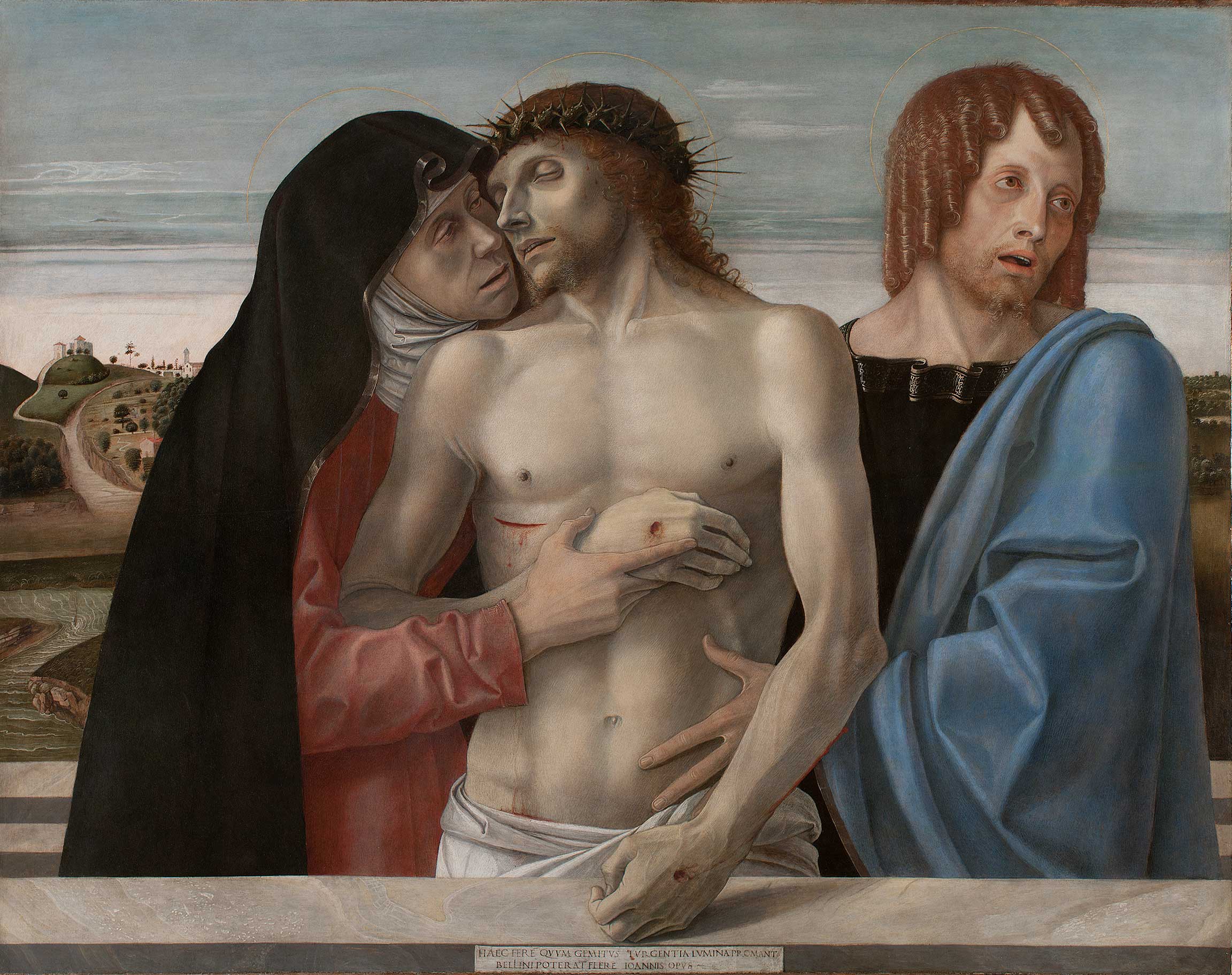
Giovanni Bellini, la Pietà, Pinacoteca di Brera

Giovanni Bellini, Pietà Donà delle Rose, Gallerie dell’Accademia
Many painters and sculptors have depicted the tragic moment in which Mary once again supports the body of her son, either holding him on her lap as though he were still a child, or drawing her face close to his. As examples, one may look at the two Pietà paintings by Giovanni Bellini.
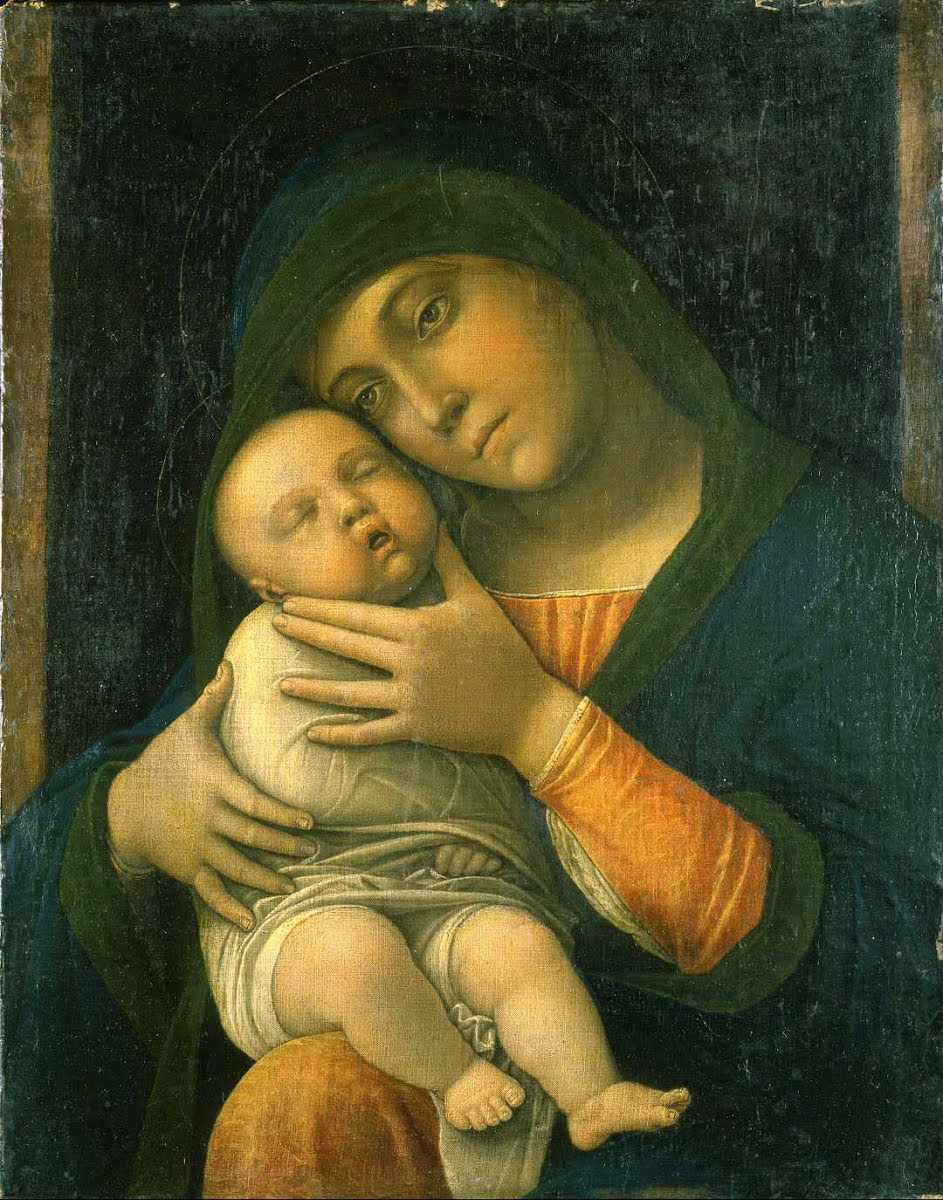
The Madonna and Child before the restoration

The Madonna and Child after the restoration
The “Madonna and Child” by Andrea Mantegna, long displayed at the Poldi Pezzoli Museum, has undergone an in-depth restoration that has brought to light the original features and colours of the painting, concealed beneath a heavy and unfortunate mid-nineteenth-century restoration by Giuseppe Molteni.
The use of “tempera magra” to paint the work reveals the private devotional character for which it was intended. Here the Virgin is not depicted as a “Regina”, but as a mother embracing her child in an intimate, everyday setting.
The restoration has revealed a gold inscription “nigra sum sed formosa”, highlighting the humble and almost pauperistic aspect of the Virgin. It has also brought back the natural light used by Mantegna, which softly envelops the couple. It seems to us that this renewed light and these restored colours now reveal the deeper meaning of the painting. The Child’s pale, whitish complexion may foreshadow the future Passion, while the mother’s healthy, dark (nigra) complexion suggests her living presence, intent on protecting and enlivening her Son.

Displayed on a wooden easel, the painting concluded the exhibition route
The lighting we selected for the painting and the exhibition was conceived precisely to emphasise this interpretation of the work. The light was soft and subdued, intended to evoke the interior of a dimly lit home illuminated by the late-afternoon sun. Only the painting was more brightly lit, as if struck by a ray of sunlight entering through a window.
The aim was to create the atmosphere of a secluded, intimate and sacred space that one almost fears to disturb.

A section of the exhibition route with descriptions of the artwork and its restoration
The light from the luminaires, placed high above the exhibition path and with narrow beams, did not cause glare but guided the way. Visitors, accompanied not only by the light but also by the notes of Pablo Casals’ “Nigra sum” playing softly in the background, entered in silence. After a preparatory sequence of videos and descriptions of the artwork and its restoration, they reached the painting and lingered before it with respect before an image that is both a work of art and a devotional icon.