

Scroll Down
Scroll Down
Scroll Down
Lighting design: Marco Miglioli ArchiLight Studio with Cinzia Ferrara and Gloria Gianatti.
Production: Madeinart (Consuelo Nocita and Gianni Mercurio) and Palazzo Reale. Curator: Anne Berest Picabia. Exhibition Design: Francesca Fornasari. Graphic Design: Luca Ladiana. Registrar: Eleonora Savorelli. Project Coordination: Giulia Gaetani. Exhibitions Office Assistant: Marta Gay. Condition Report: Renata Knes and Giorgia Zantedeschi. Installation: Proevent. Lighting Installation: F.O.H. Photography: Marco Miglioli and gloria Gianatti.
PALAZZO REALE | MILAN | ITALY
“Enter here as you would enter the night: not quite knowing what awaits you, your eyes wide open to what glimmers in the darkness“.
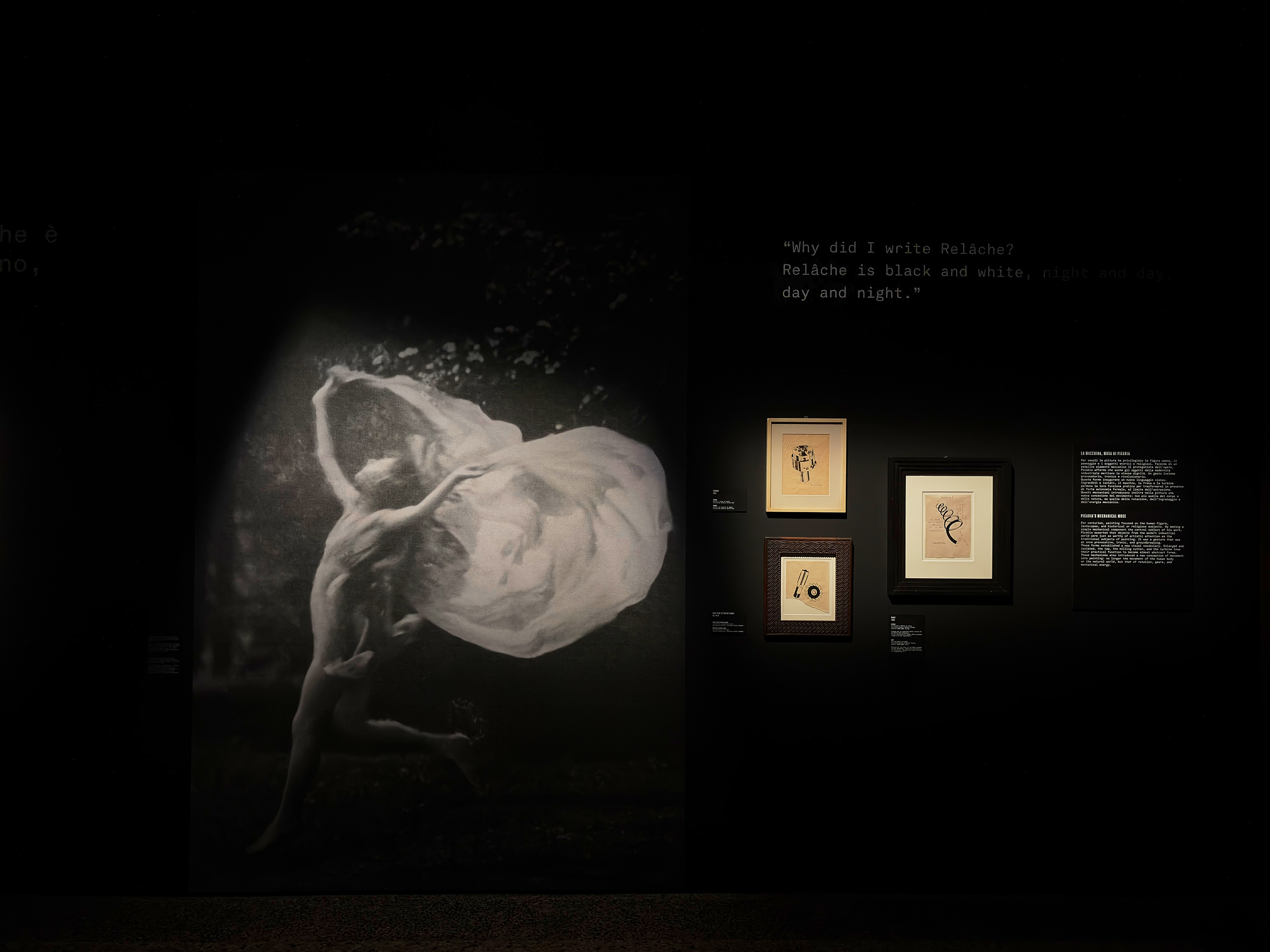
“Danzare sulla tela” (Dancing on the Canvas)
Palazzo Reale in Milan hosted a major retrospective dedicated to Francis Picabia for the first time in Italy. The exhibition, featuring over 170 original works, traces the French artist’s pictorial styles and ways of life in an imagined journey from dusk to dawn
The night is therefore the inspiring and guiding element behind the exhibition lighting.
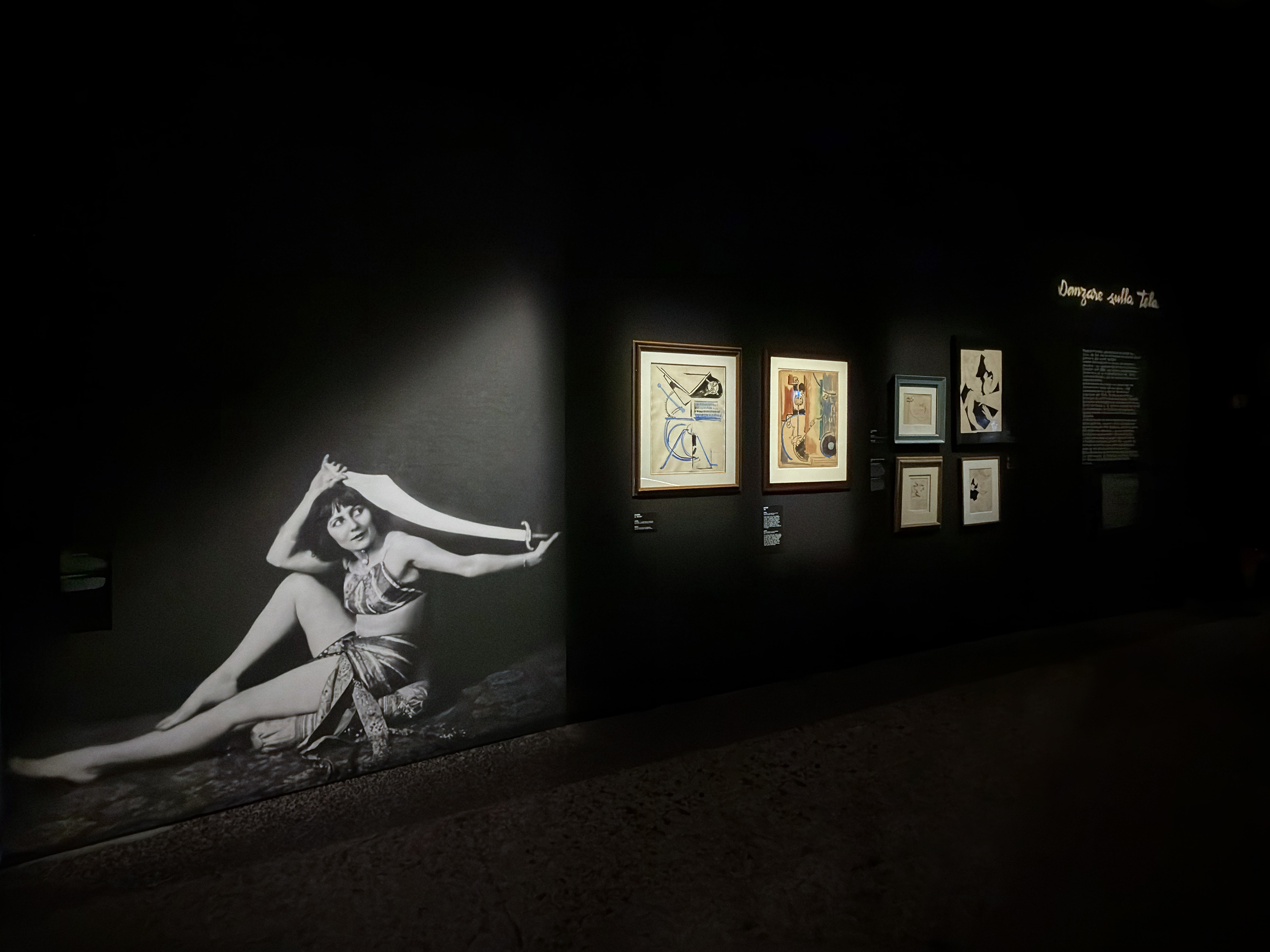
“Danzare sulla tela (Dancing on the Canvas)”. In this room, light plays with the paintings and the silhouettes of dancers in the darkness, as in a frenetic ballet
The changing light of the night creates a perceptual experience that suggests rather than defines. t is as if it were bringing images forth from dreams and the unconscious, to immerse them in the night once again, generating new images from one room to the next.
Between night and day there are nuances; there is no clear-cut transition between darkness and light. This constant transition, moving through different shades of light and colour, evokes Picabia’s different sides, a wanderer through life and painting who traversed different artistic styles.
The lighting differentiates the rooms without fragmenting them. While darkness and half-light provide the unifying thread throughout the exhibition, changes in light along the exhibition route are layered over this half-light, eventually leading to a gentle natural light.
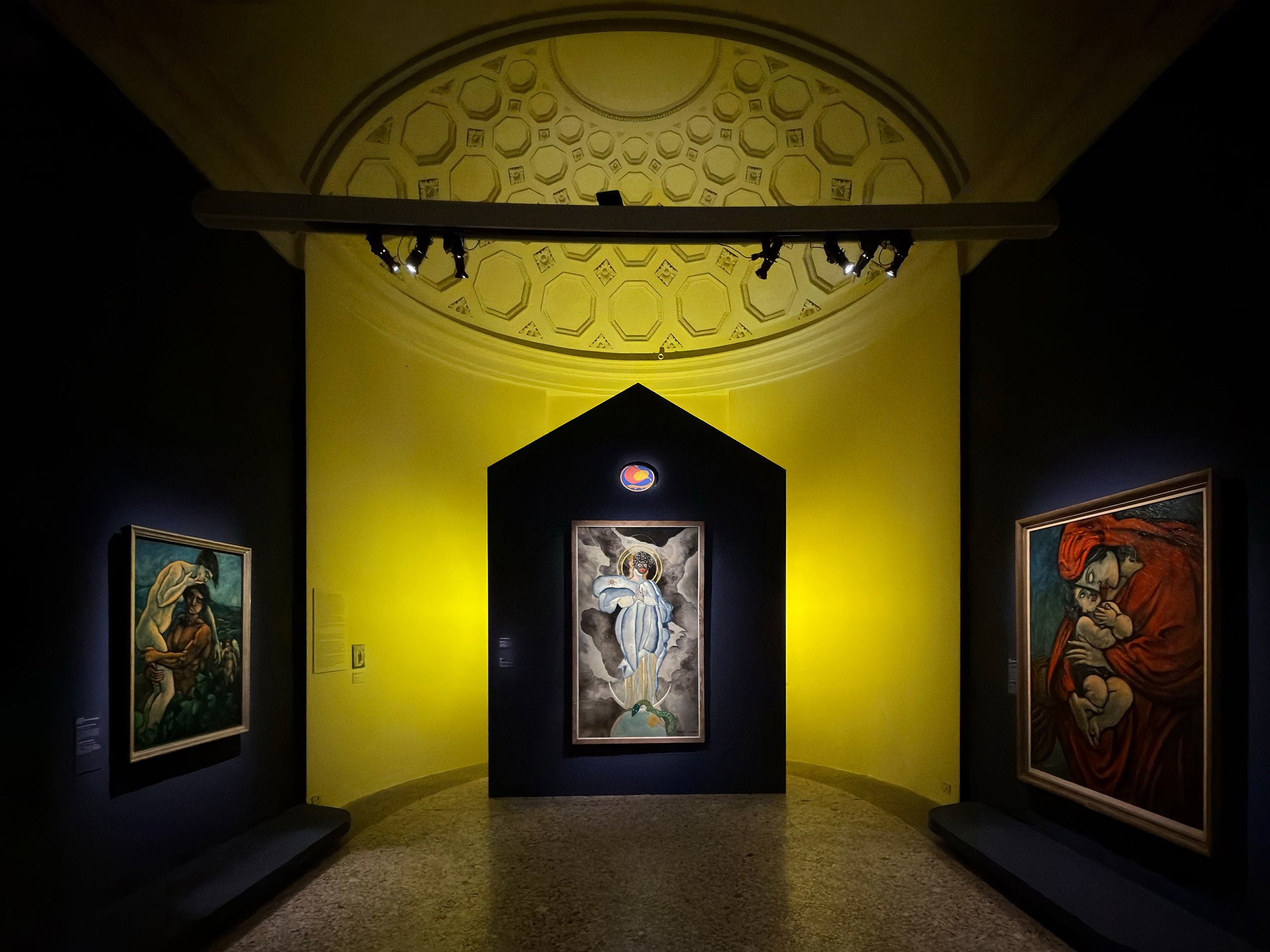
“La notte mistica” (The Mystical Night). In this room, which evokes the shape of a small chapel, light becomes a transcendent element that colours both the artworks and the space
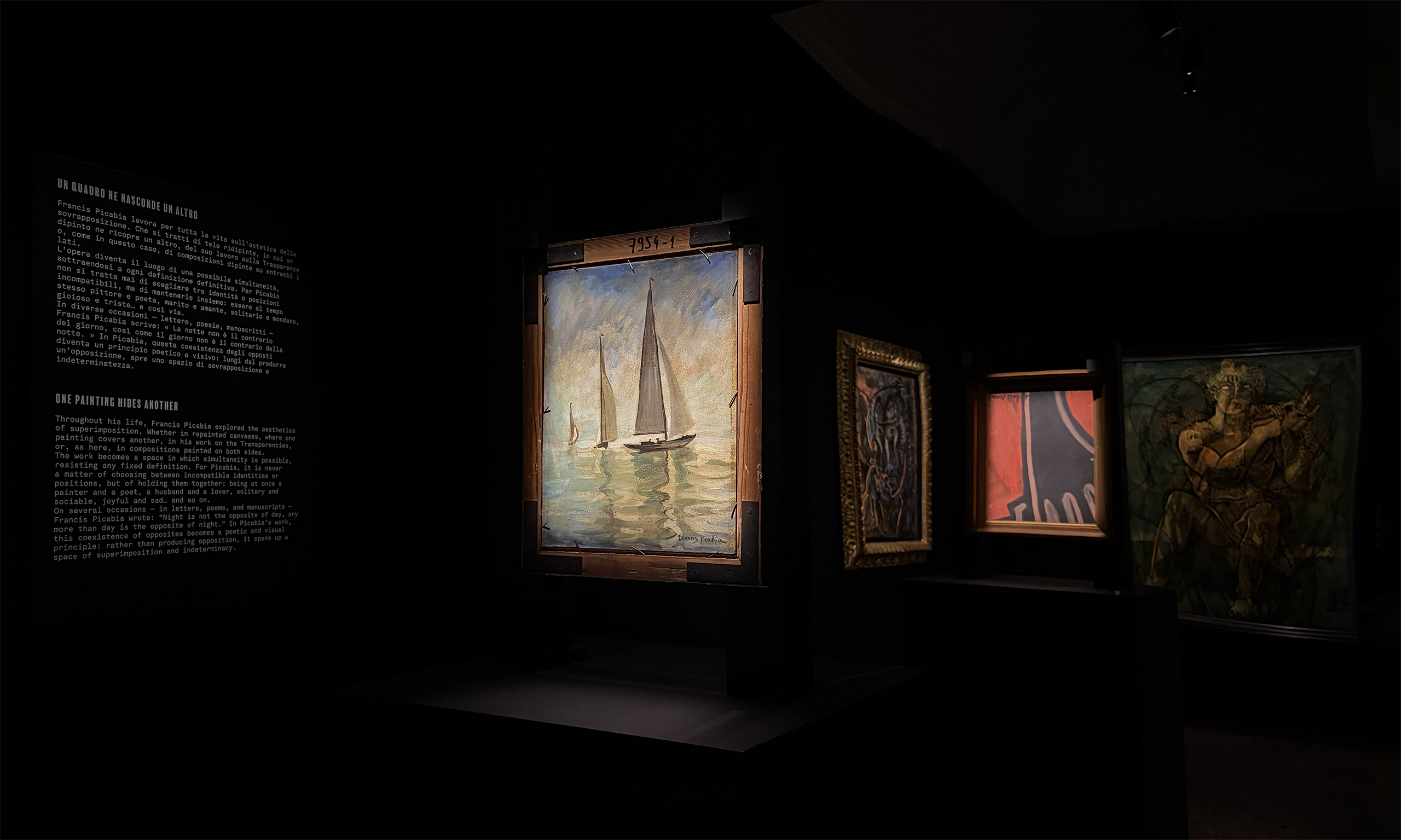
“Recto verso” (Recto and Verso). In this room, a mirrored wall reflects the paintings, dissolving the boundaries of the space, as in a nocturnal dream
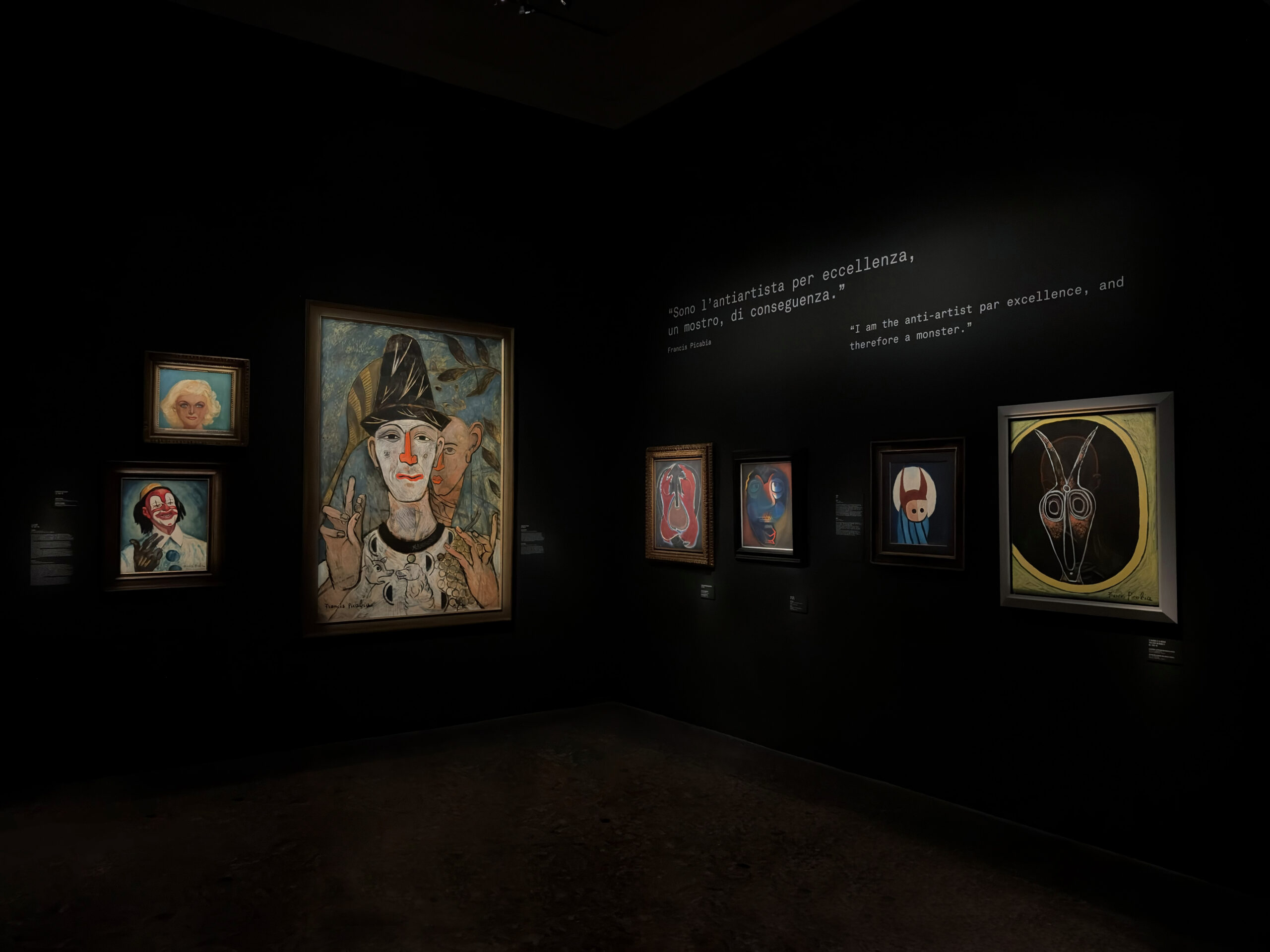
“Mostri e incubi” (Monsters and Nightmares). The paintings, depicting monsters and distorted dreams, seem to emerge from the depths of the night, in a place where it is difficult to discern the boundaries
There is a very dark room, another in which the works are enveloped in yellow light, in yet another there is a corridor with a ceiling of light bulbs, intended to recall the stage design of a performance created by Picabia in the 1920s. These rooms represent Picabia’s nocturnal wanderings. He lived and painted at night, during his “prolific” nights.
The exhibition thus presents itself as a walk through a nocturnal setting: it is as if one were walking through an early twentieth-century city on a dimly lit night. The half-light enveloping visitors tends to create an intimate atmosphere and a kind of complicity among those sharing the same experience, as they too become wanderers of the night.
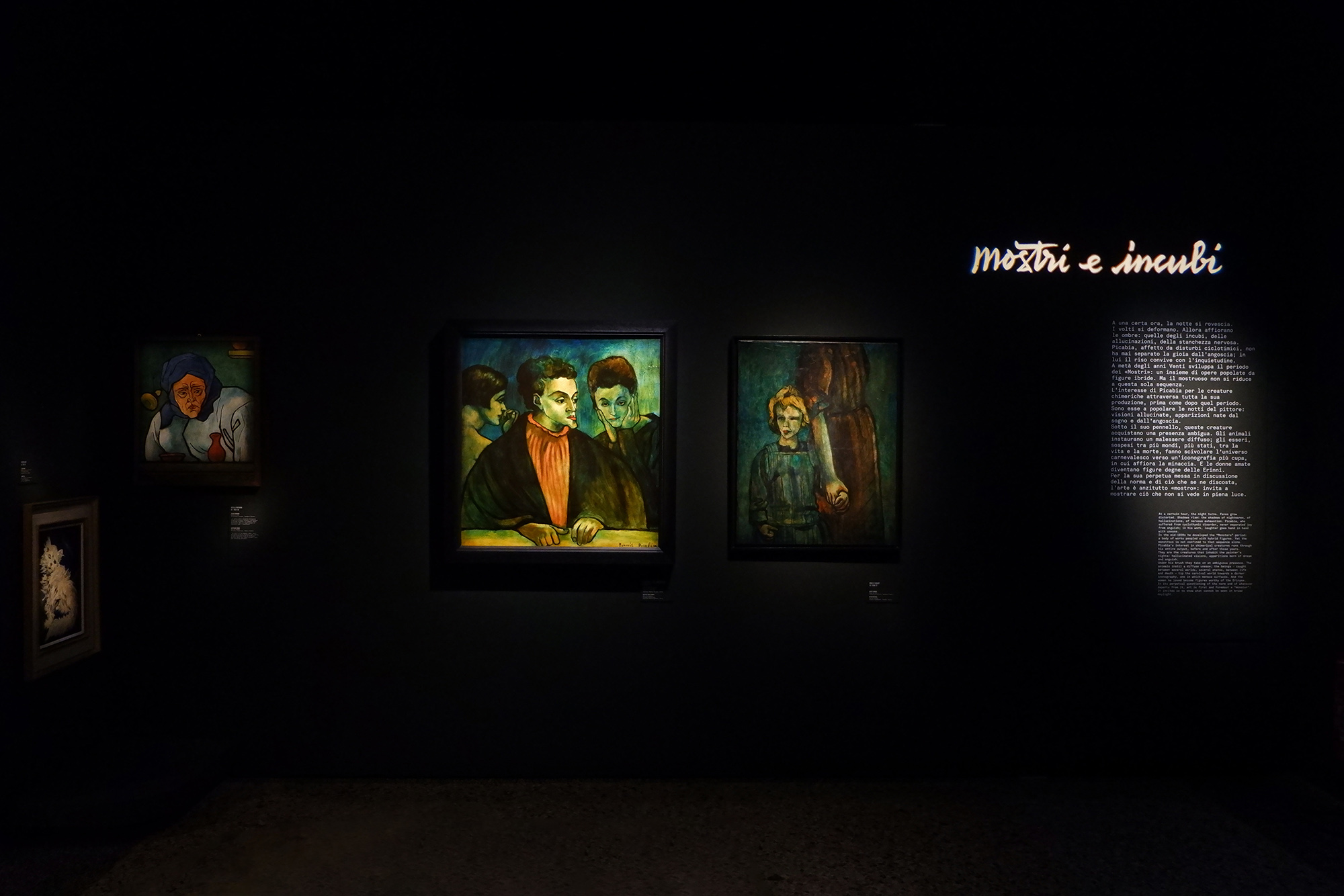
“Mostri e incubi” (Monsters and Nightmares). In this room, the strong contrast in brightness makes the figures appear like nightmares and shadows in a dream
The titles of each room, projected using light, underline the Indeterminate nature of the night: the names are not fixed, sharply defined and indelibly printed, but are ready to fade away as soon as the sun’s rays erase them with their intensity. This is why, in the final room, when the rosy light of day enters through the windows, the texts reappear in printed form.
The exhibition is organised into 12 spaces (Opening the Gates of Night; The Spanish Night; Join the Party – Relâche; Dancing on the Canvas; Amorous Parade; Night Fevers; Recto and Verso – Mendiga; Monsters and Nightmares; The Mystical Night; “Picabian” Parties; Chrono Biography; The Day Is Not the Opposite of the Night), each corresponding to a different moment of the night.
“Parata amorosa” (Amorous Parade)
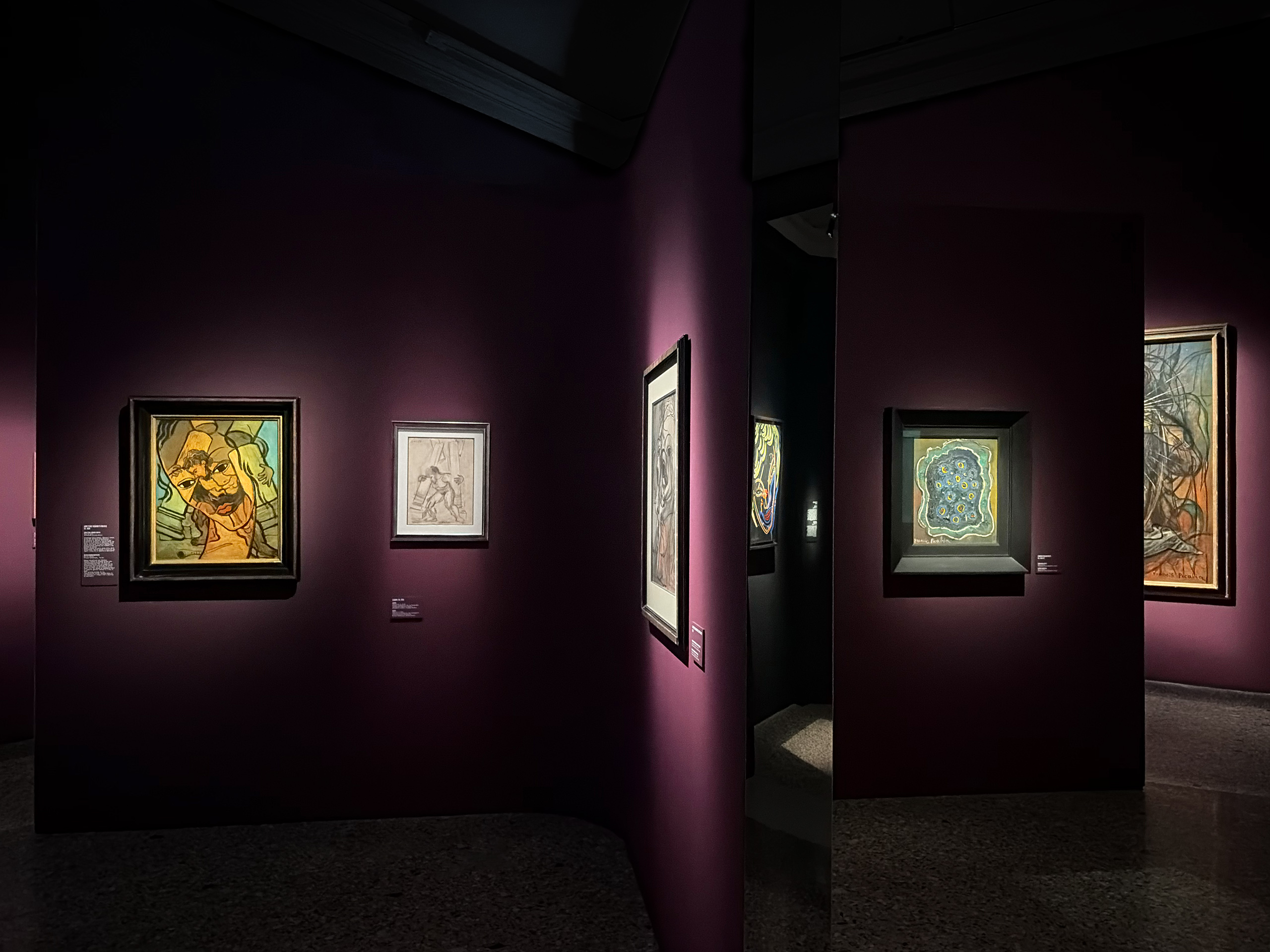
“Febbri notturne” (Night Fevers)
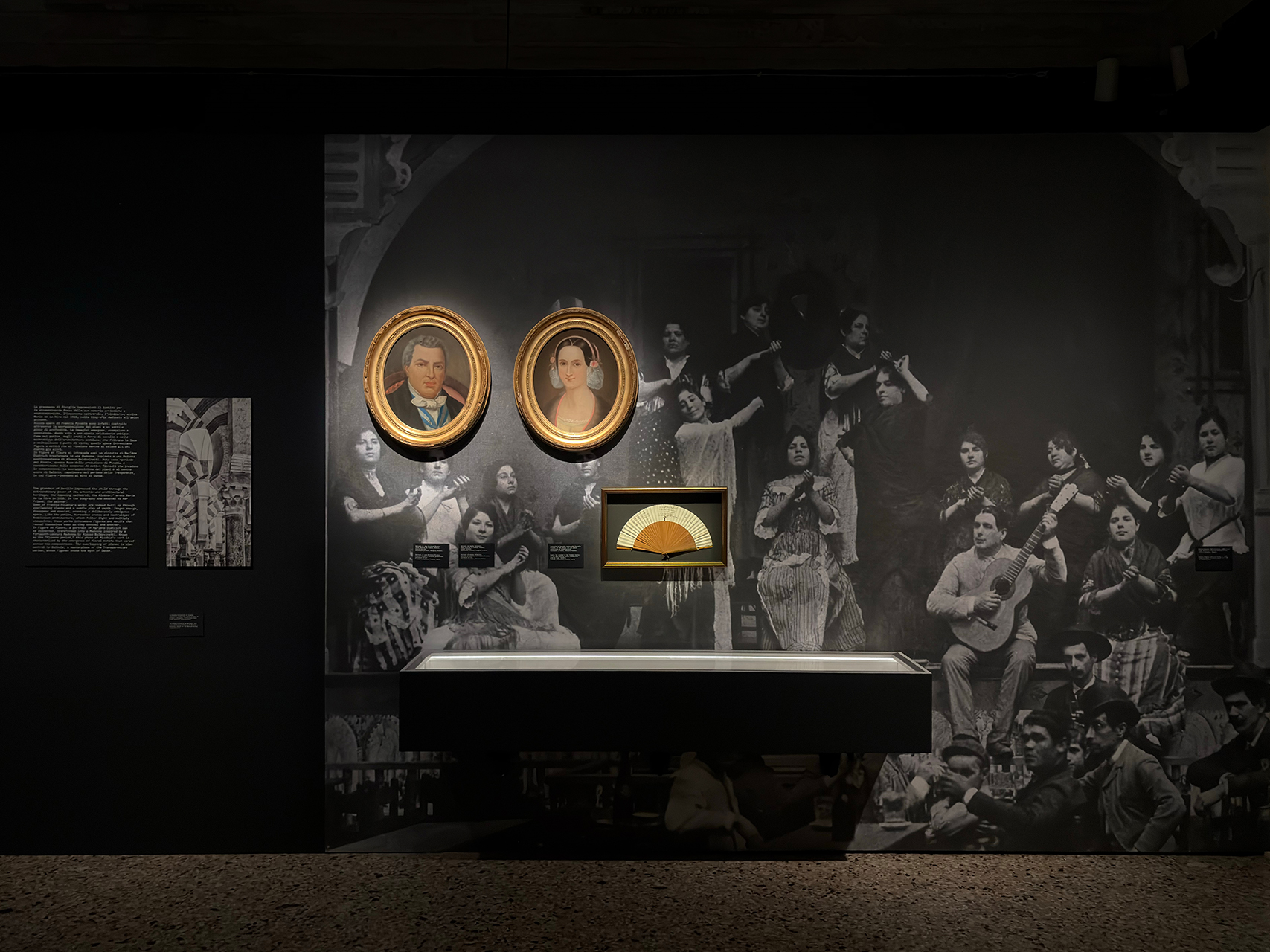
“La notte spagnola” (The Spanish Night)
While darkness is the unifying thread throughout the exhibition, each room is characterised by a different colour and lighting, as it represents a distinct moment in Picabia’s night.
Many works on paper, watercolours and canvases, on loan from major museums (the Centre Pompidou, the Royal Museums of Fine Arts of Belgium, the Bibliothèque nationale de France, the Musée d’Art Moderne de la Ville de Paris, the MART of Rovereto, the Dansmuseet of Stockholm and the Kunsthaus of Zürich, to name a few) had to be displayed under specific conditions regarding humidity, illuminance and the colour quality of the light. Great care was therefore taken to ensure that these values were respected.
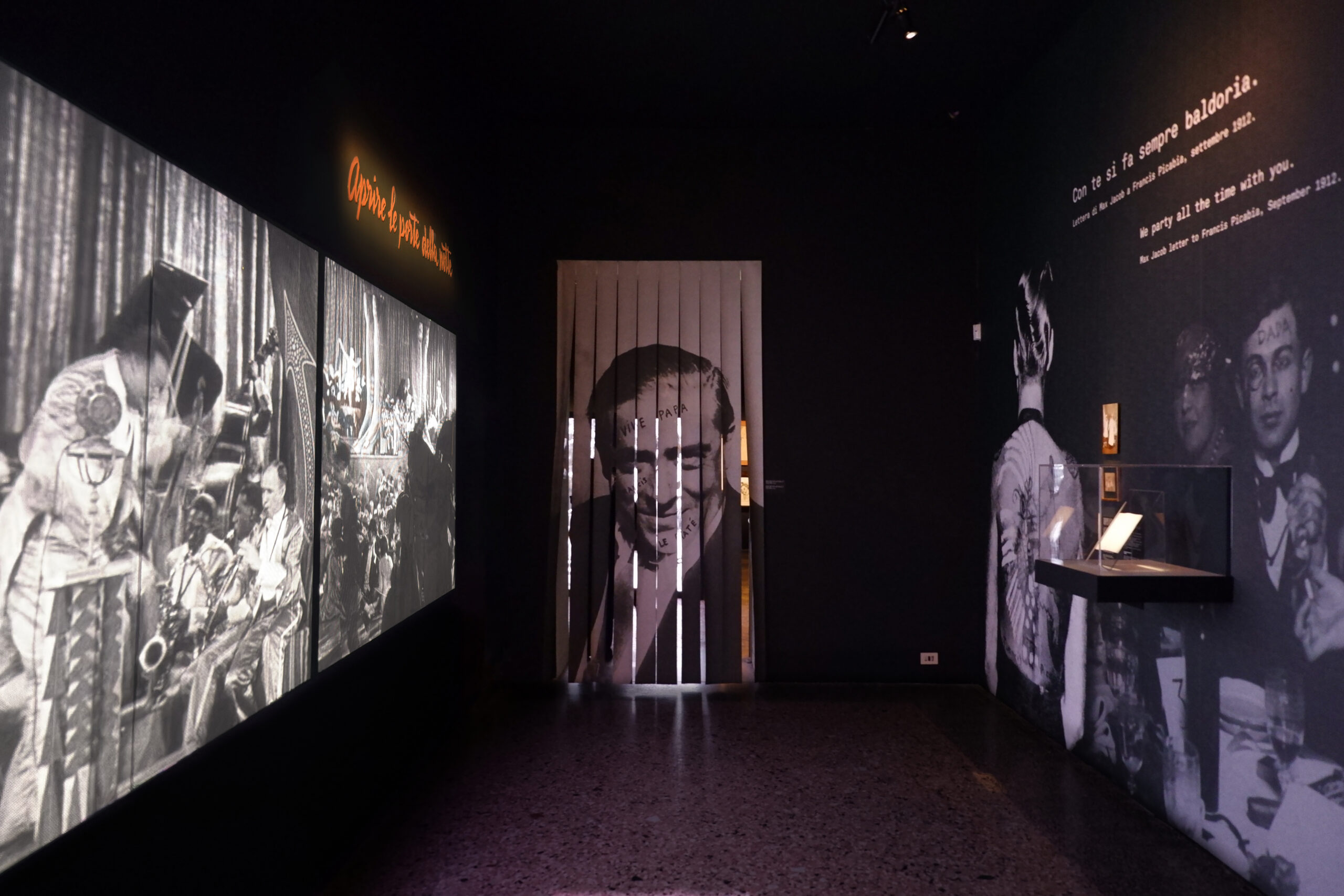
“Aprire le porte delle notte” (Opening the Gates of Night). he entrance to the exhibition. Jazz music and a video of parties, whose flashes of light intermittently illuminate the room, invite visitors to enter Picabia’s night.
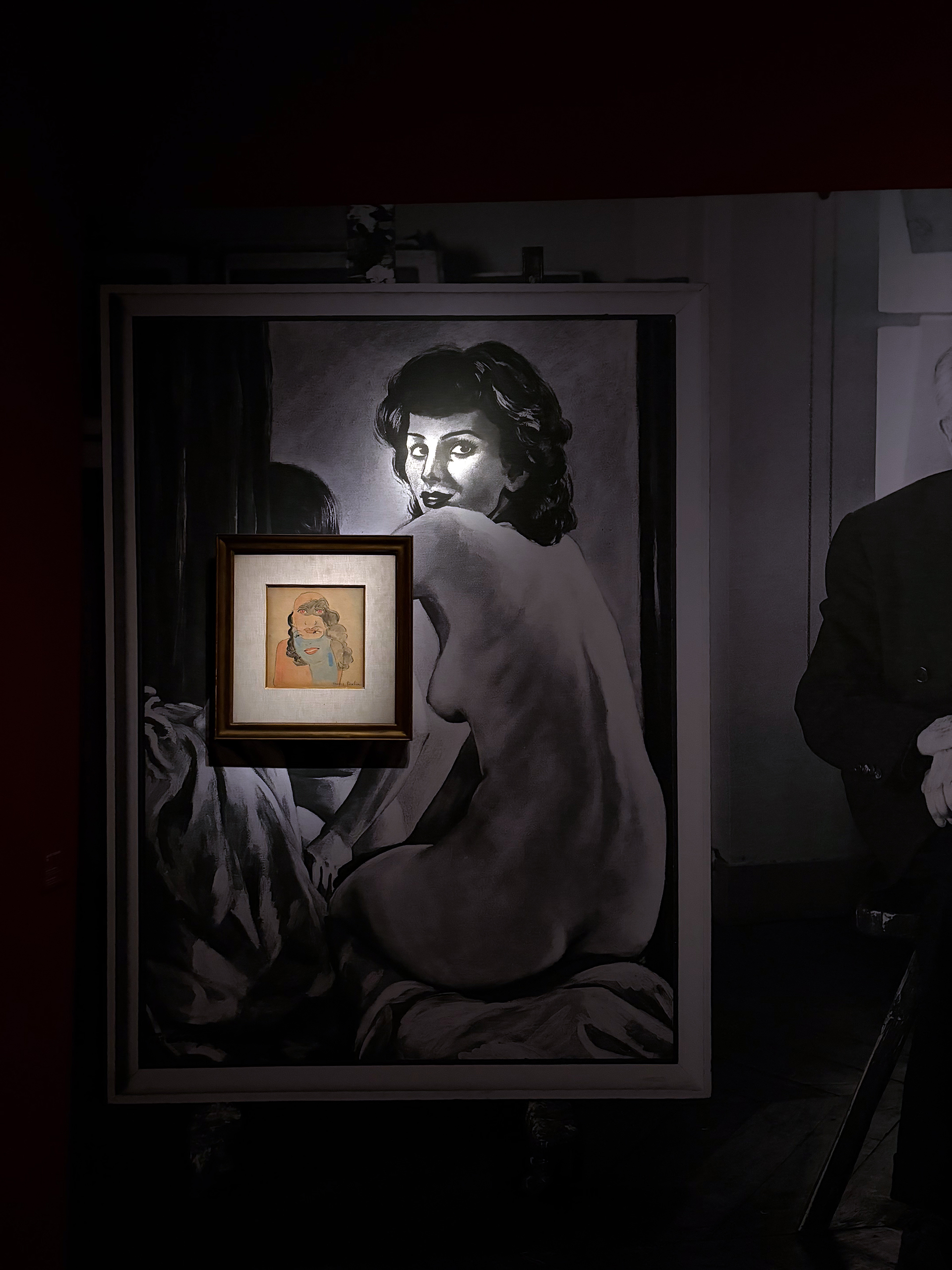
“Parata amorosa” (Amorous Parade)
In some rooms, the colour temperature of the light varies slightly to suit both the background colours of the walls and the atmosphere (sometimes cold and unsettling, sometimes welcoming, sometimes dreamlike) experienced while moving through the spaces.
The works were illuminated simultaneously by between one and three lighting fixtures, positioned both to avoid veiling reflections, direct or indirect glare (also taking into account the presence of numerous mirrors and the low light levels in the spaces) and to illuminate the works while imagining, together with the exhibition curator, the particular atmosphere in which they should be presented.
The artificial light from the diffuse-beam projectors illuminating the final room was designed to harmonise with the sunlight filtering through the rosy curtains of the palace’s large windows.